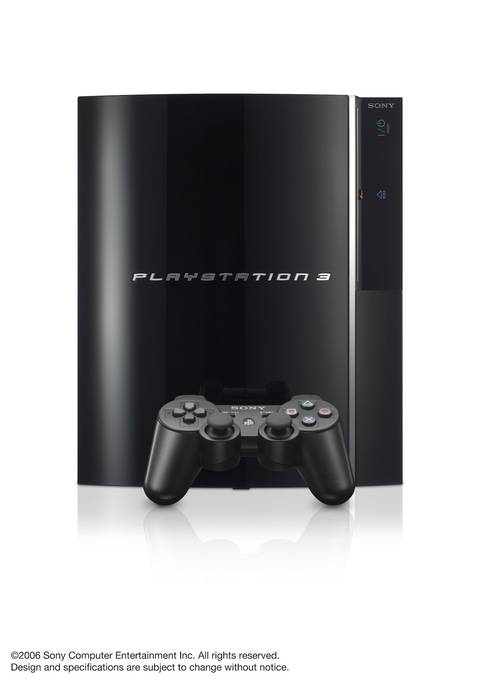
I wonder if any of our readers still have a heavy, black game console sitting quietly next to their TV in their homes. Unfortunately, my home is small, and there is one very important piece of hardware that has already served its purpose and is stored in a closet. That is the legendary gaming hardware, the PlayStation 3 (PS3), which was released by Sony Computer Entertainment (SCEI at the time) on November 11, 2006.
The mid-2000s saw an unprecedented technological paradigm shift in gaming history, from standard definition to high-definition graphics. The PS3, which fundamentally changed the concept of a stationary game console and presented an overwhelming vision of the future to game fans and creators around the world, continues to emit an extremely special shine and presence even after nearly 20 years since its release.
This time, the author, who lived through that era in real time, will talk about the PlayStation 3, which was a huge turning point in the history of home game consoles, and at the same time went through numerous technical challenges and turbulent dramas, focusing on the ultimate romance hidden in the legendary PS2 compatibility function installed in early models, and the bittersweet memories of the 3D virtual space “PlayStation Home” that players were fascinated by during its heyday.
November 11, 2006, the birth of PS3 that opened the door to the next generation and memories of Sony’s launch titles
November 11, 2006. The unprecedented long lines and enthusiasm that formed in front of electronics stores and game shops in Japan on that day are still vividly etched in the memories of game fans.
SCEI, which had reigned as the absolute king of the gaming industry both in name and reality, with its previous generation console “PlayStation 2” having achieved worldwide success, has finally released the next-generation entertainment system. That was the PS3.
The biggest impact that the PS3 had on the industry was, without a doubt, the full-fledged beginning of the Full HD (1080p) era and the monster performance that made it possible.
The ultra-high-performance CPU “Cell Broadband Engine” developed as the core was a processor of a different dimension, created by IBM, Sony, and Toshiba, who pooled vast amounts of funds and technology.
There’s no point in going into too many technical details, so to summarize, it had amazing performance, making it possible to express photorealistic glows that set it apart from previous game screens, perform complex physical calculations, and perform real-time rendering of vast 3D spaces.
Furthermore, the standard installation of a Blu-ray Disc drive, the next generation of high-capacity optical disc media, was a huge decision that staked the future of the Sony Group.
At the time, Blu-ray Discs were used, which could fit a huge amount of high-quality data and detailed 3D model data onto a single large-capacity disc of up to 50GB, which was impossible to fit on a DVD (single layer 4.7GB/dual layer 8.5GB). This not only dramatically improved the expressive power of games, but also boasted unprecedented performance and low price even for Blu-ray players, which were expensive at the time, and became the mainstay of movie viewing at home.
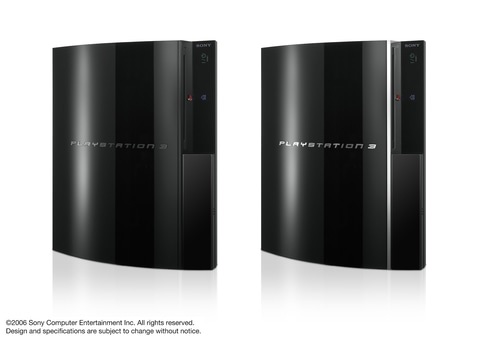
A solid body with beautiful curves that shines in piano black, a capacitive touch power supply/eject button, a slot-in disk drive, and a “PLAYSTATION 3” engraving. The moment I picked it up, I felt a sense of exhilaration, as if I were holding a high-end AV device packed with future cutting-edge technology, rather than just a toy for children.
The original SCEI launch titles that were released at the same time as the main unit included challenging titles that showcased the potential of the hardware, such as “GENJI – Kamui Soran”, which attracted attention for its overwhelming graphics and sense of scale with Japanese-style action, and “RESISTANCE – The Day of the Fall of Humanity”, which depicted a gruesome battle against a strange invader and heralded the beginning of a new era of science fiction shooting.
Although I myself did not play these SCEI launch titles thoroughly at the time, I fondly remember looking at the screen shots and videos with my fingers in my mouth, thinking, “The time has finally come for us to be able to express images to this level,” feeling the arrival of a new era.
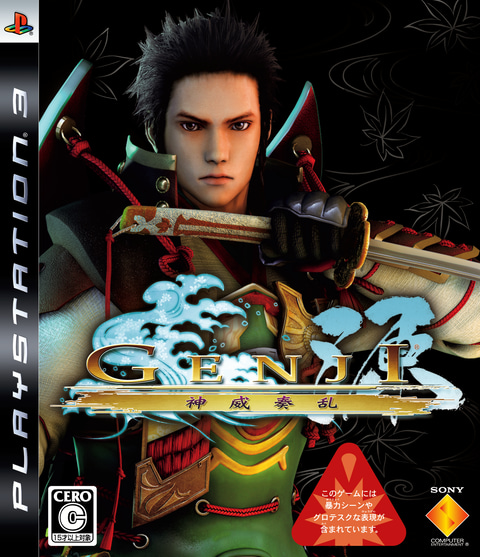
“GENJI ~Kamui Soran~” *Image provided by: Sony Interactive Entertainment (hereinafter the same *Some quotes from past articles)
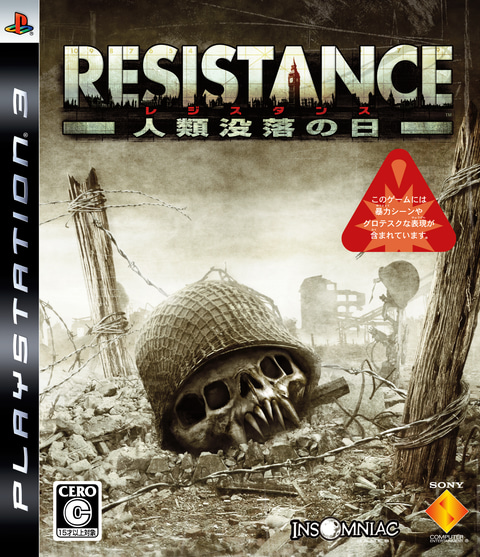
“RESISTANCE -The day of the fall of mankind-“
The true romance hidden in the early model. Legendary PS2 compatibility and the drama of technological challenges
In talking about the long history of the PS3, there are some that are still passed down as legends among game collectors and retro game fans. That’s exactly what the early models (model numbers: CECHA00/60GB model, CECHB00/20GB model) were released at the same time as their launch in 2006.
Why is this early model PS3 so beloved and why is it still sold at such a high price among collectors? The biggest reason for this was that it had complete hardware compatibility with PS2 software.
Surprisingly, in addition to the original PS3 main board, the two main chips that were the heart of the previous generation PS2 were physically integrated into the internal board of the early PS3. In other words, rather than the software-like pseudo-reproduction of later-era emulation, the system adopted an overwhelming specification that was extremely luxurious and could be described as a feat of skill, by incorporating the actual PS2 chip inside itself.
As a result, the early PS3 was the ultimate complete PlayStation, with all three generations of Sony’s proud game software, including the “PlayStation CD-ROM,” “PlayStation 2 DVD-ROM,” and “PlayStation 3 Blu-ray Disc,” running perfectly on a single hardware with an app computer function.
The vast library of PS2 masterpieces was digitally output via the HDMI terminal, and thanks to the PS3’s internal upscaling and smoothing functions, it was a dream-like experience for gamers to see high-quality images with smoother contours than the graphics of the time.
However, this overly luxurious hardware compatibility came at the cost of a soaring price (60GB model open price, 20GB model 62,790 yen, later revised to 49,980 yen) and increased heat generation and power consumption.
After that, in order to reduce costs and promote mass production, SCEI finally made the difficult decision to completely abolish the PS2 compatibility function starting with the 40GB model (CECHH00 series) released in the fall of 2007.
By evolving into thin models (CECH-2000 series) and ultra-thin models (CECH-4000 series) that appeared later, the hardware became more power-efficient, quieter, lighter, and cheaper. The profound romance of the early 20GB/60GB models, filled with dreams without fear of technical limitations, still touches our hearts as a shining monument in the history of gaming hardware.
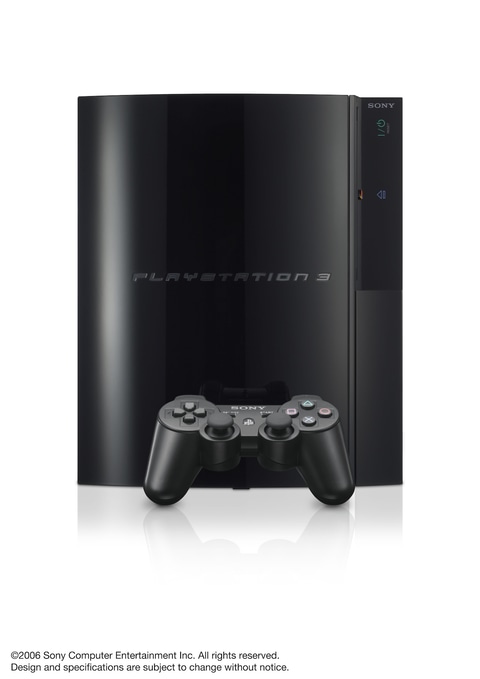
CECHA00/60GB model
Online and system infrastructure innovation. PlayStation Network, torne, ad hoc party
The achievements of the PS3 are not limited to advances in graphics and hardware. The true accomplishment of the PS3 is that it created the basic framework for the network experience and system infrastructure of the modern PS4 and PS5.
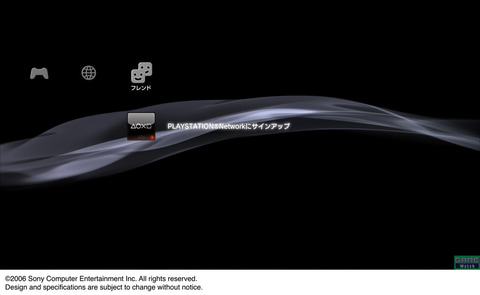
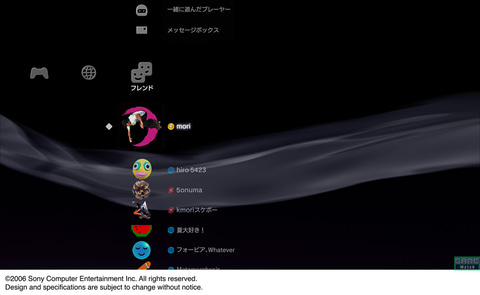
Chief among them was the establishment of Sony’s network service “PlayStation Network (PSN),” which allowed players to connect with players around the world by registering for a free account.
Until the PS2 era, online battles required separate communication procedures and paid membership procedures for each title, but on PS3, they have been unified through a common account (PSN ID) and a sophisticated user interface called the “Cross Media Bar (XMB),” with functions on the horizontal axis and content on the vertical axis.
Manage your friend list, text and voice chat, download and sell trial versions and additional content on the PlayStation Store. Today’s gaming experience, where online infrastructure is commonplace, has become a daily reality thanks to the PS3’s PSN.
Furthermore, let’s not forget the introduction of the trophy function, which visualizes the player’s sense of accomplishment and brings new joy to playing the game. Bronze, silver, gold, and platinum trophies that only those who can overcome all challenges can obtain. The thrill of overcoming a difficult situation and unlocking a trophy accompanied by the unique “pilon!” sound was an epoch-making system that fundamentally changed the way games are played.
Additionally, the terrestrial digital recorder kit “Torne” was an explosive hit as a genuine Sony peripheral that symbolized the potential of the PS3.
By simply connecting a dedicated tuner to the PS3’s USB terminal, torne transforms into a terrestrial digital recorder with lightning-fast response and intuitive program guide operation. With its overwhelmingly fast operability and sophisticated UI design, it revolutionized the experience of recording and viewing TV programs. The PS3 has been a huge success in attracting not only game fans but also the general public who enjoy watching anime and dramas in their living rooms, and establishing the PS3 as the most used companion to the TV at home.
The existence of “Ad Hoc Party for PlayStation 3,” a function linked to the PSP (PlayStation Portable), also excited the Sony fan community at the time. This is a dream service that allows you to enjoy online multiplayer games with players from all over the country from the comfort of your own home by connecting your PS3 to a wired LAN network, which normally allows you to play PSP software only over short-distance wireless communication.
I have fond memories of connecting voice chats night after night (back then, there was no such thing as LINE, so Skype was the main voice chat method), creating rooms with friends and strangers from all over the country, and immersing myself in cooperative play and battles. More than just a gaming hardware, the PS3 was a sacred place for an online community that strongly connected people.
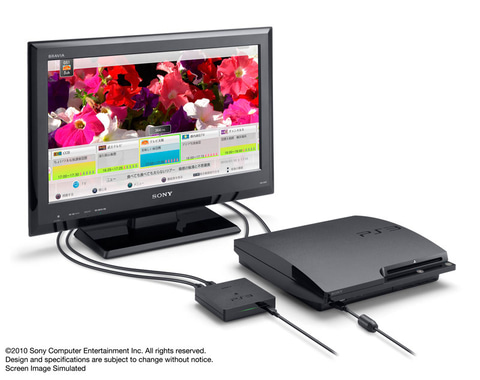
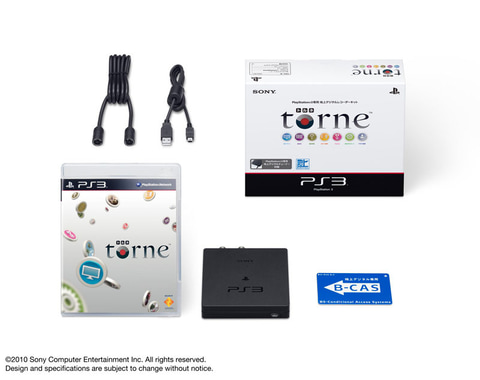
PS3 terrestrial digital recorder kit “torne”
A dream 3D metaverse that started with “What is this?” Beloved avatars and memories of where you are left behind by “PlayStation Home”
When talking about the PS3 network experience, there is a legendary community service that cannot be forgotten, and which, looking back now, was more than 10 years ahead of its time. That’s exactly what Sony’s 3D virtual space “PlayStation Home (PS Home)” started in 2008.
One day, when I started up my PS3 and looked at the Cross Media Bar (XMB), I saw an icon floating in the network column. “What is this?” I pressed the button out of mild curiosity. That was the beginning of another life for the players.
The screen changes and the first thing that greets the player is the creation of an incredibly detailed and free avatar. Facial contours, fine adjustments to the eyes and mouth, hairstyles, body shapes, and a wide variety of clothing and accessories. Just the process of spending time and creating an avatar of my choice on the screen made my heart beat faster.
People who make themselves look like their real selves, people who create beautiful men and women that everyone admires, people who dress in unique and eccentric fashions. It was the moment when my own “other self” was definitely born on the other side of the screen.
After completing the avatar and taking a step forward, what unfolded was a huge home square filled with light.
It was a dreamlike 3D space where players from all over the world gathered in real time. Even without exchanging words, when someone bows or waves using the emote function, or starts dancing in the center of the square, players around them gather one by one, and before you know it, a large number of avatars line up and start dancing, creating a warm, surreal, and extremely fun scene.
There was a bowling alley in the plaza, a place where you could have fun competing against millionaires, billiards, and arcade games, or go out to a dedicated lounge space that collaborated with each game title, and there was certainly a new place where “playing games wasn’t the only purpose.”
I have fond memories of hosting private parties in my personal room, my personal space, where I carefully arranged furniture and posters that I had gotten from events and shops, and inviting friends I had grown close to to my room. The plaza’s decorations changed depending on seasonal events such as Christmas and Halloween, and it was a space where strangers from all over the country gathered every night to celebrate.
“PlayStation Home” was a forerunner of the modern-day “Metaverse” and “VRChat,” and it was a premature utopia of the future that came to fruition thanks to the PS3’s monster hardware’s rendering capabilities and network infrastructure.
In March 2015, PS Home reached the end of its service, although it was regretted. The bonds between the players gathered at the home square on the final day, waving and dancing until the final moment as the countdown progressed. The memory of the avatar and the plaza that began with curiosity, “What is this?” continues to shine unfading in our hearts as one of the most endearing pages of our youth that the PS3 charmed us with.

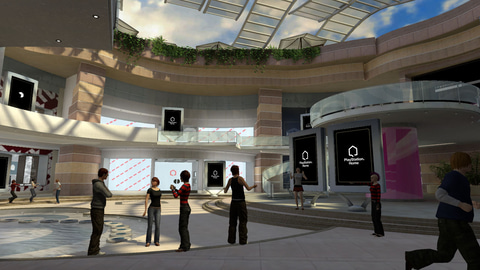
PlayStation Home
The existence of titles that can only be played on PS3 and the uniqueness of the hardware
Approximately 20 years have passed since its release, and now that modern platforms such as PS4, PS5, and PC have become widespread, many past titles have been revived in modern times through HD remasters and ports.
However, did you know that there are still many titles that can only be played on the actual PS3? This is the biggest reason why the PS3 is said to be the unique hardware even in the Reiwa era. By the way, the HDD of my PS3 crashed and broke once, but the fact that I replaced the HDD and that it is still stored away with great care is due to the uniqueness of the PS3.
The PS3 had many unique titles that surprised gamers and made them wonder, “A title like this existed!” as well as many representative series that strongly drove the evolution of the hardware.
For example, “Demon’s Souls” was born out of joint development between SCEI (Japan Studio) and From Software, and later became the origin of the global gaming trend “Souls-like.” The original PS3 version of Demon’s Souls, released by SCEI in 2009, still has its unique texture and balance that can only be experienced on an actual PS3 console.
There are many other titles, including “TOKYO JUNGLE” in collaboration with Crispy’s, “AFRIKA” developed by Rhino Studio, and “White Knight Story: Ancient Heartbeat” by Level-5 and Japan Studio.
Many of these titles have a history of being developed with the special hardware configuration of the PS3, so even today there are quite a few titles that cannot be easily accessed even on the PlayStation platform.
No matter how much the latest hardware evolves, the fact remains that the masterpieces created for the PS3 are still treasured within the PS3 and continue to emit unique value.
In order to pass on the culture and art of games to future generations, hardware compatibility and archiving are eternal issues. However, it is precisely because these ports have not yet been realized that the PS3 hardware continues to shine, not just as a gaming machine from the past, but as an irreplaceable treasure chest that holds the best gaming experiences presented by SCEI.
From a turbulent start to a period of maturity. An ensemble drama of masterpiece games that have overcome countless hardships and blossomed into full glory.
Although the PS3 is now hailed as a historical masterpiece, its journey was not always smooth. In fact, it can be said that the first half of its history was a series of intense hardships and trials that are rarely seen in the history of gaming hardware.
Third-party game developers had an extremely difficult time optimizing multi-platform titles due to the high price of the unit when it was first released and the extremely special structure of the Cell processor. For several years after its release, it continued to face a tough battle against competing hardware.
However, the true fear and potential of the PS3 was revealed in the mid- to late-maturity period, when first-party and other creators fully understood the PS3’s characteristics and the hardware’s full potential began to blossom.
Everything on the screen is rendered in real time, and the story-telling and action depicted in such an overwhelming quality that it can be mistaken for a movie has been praised around the world as “a game that surpasses a movie.”
The PS3’s initial struggle was overturned by the overwhelming maturation of its technological capabilities and the enthusiasm of its creators, and the PS3 eventually sold over 80 million units worldwide and became the “top-of-the-line entertainment hardware.” It was an impressive performance of technology and passion, where both game developers and hardware designers continued to push the limits.
The brilliance of the future that PS3 has shown has not faded even after 20 years.
Approximately 20 years have passed since its release in 2006. Technology in the game industry continues to advance, and now we’re in the era of PS5, where ultra-high-speed SSDs allow you to experience zero loading times, and advanced visual expressions such as 4K/120fps and ray tracing have become commonplace.
However, the origins and seeds of all the wonderful PS5 experiences that we now take for granted, such as high-definition rendering, large-capacity Blu-ray media, online networking (PSN), trophy functions, digital content download purchases, and immersive action that combines graphics and story to a high degree, were undoubtedly planted in the PS3, which was launched in 2006.
I touch the heavy body of an early model PS3, and place my finger on the capacitive touch sensor power button. The beautiful silence of that cross media bar spreads across the screen along with the nostalgic electronic beeping sound.
No matter how much time passes, the overwhelming romance hidden in the early PS2 compatible features, the warm feeling of PlayStation Home that spread from people wondering, “What is this?”, and the brilliance emitted by masterpieces that can only be played on PS3, will never fade no matter how much time passes.
The PS3 challenged the limits of limited hardware and delivered us the gaming experience of the future. We will continue to move forward with the history of wonderful games, with the memories and gratitude of the passionate challenges engraved on that black, solid hardware in our hearts.
(C)2026 Sony Interactive Entertainment Inc.
(C)2006 Sony Interactive Entertainment Inc.
(C)2006 Sony Interactive Entertainment LLC.